

News & Events
Events
News

Toronto mpox studies suggest ways to reduce viral spread
Less than three months since it launched, the monkeypox rapid research response led by the University of Toronto’s Emerging and Pandemic Infections Consortium (EPIC) and three partner hospitals is generating results that could help curb transmission of the virus. Modelling work describes how to optimize the initial rollout of a limited vaccine supply to prevent the most infections while other studies focus on the risk of environmental transmission.

Member Spotlight: Michael Norris
A Q&A with Michael Norris, a new faculty member in the department of biochemistry in the Temerty Faculty of Medicine. Learn more about Michael’s research, how he became interested in virology and what excites him about EPIC.

Science Literacy Week 2022: Meet two mathematical modellers!
September 19 to 25 marks Science Literacy Week in Canada, an opportunity to showcase how science, discovery and ingenuity shape our lives. The theme for Science Literacy Week 2022 is mathematics so we decided to sit down with two young scientists to talk about mathematical modelling of infectious diseases and their own personal work in that area.
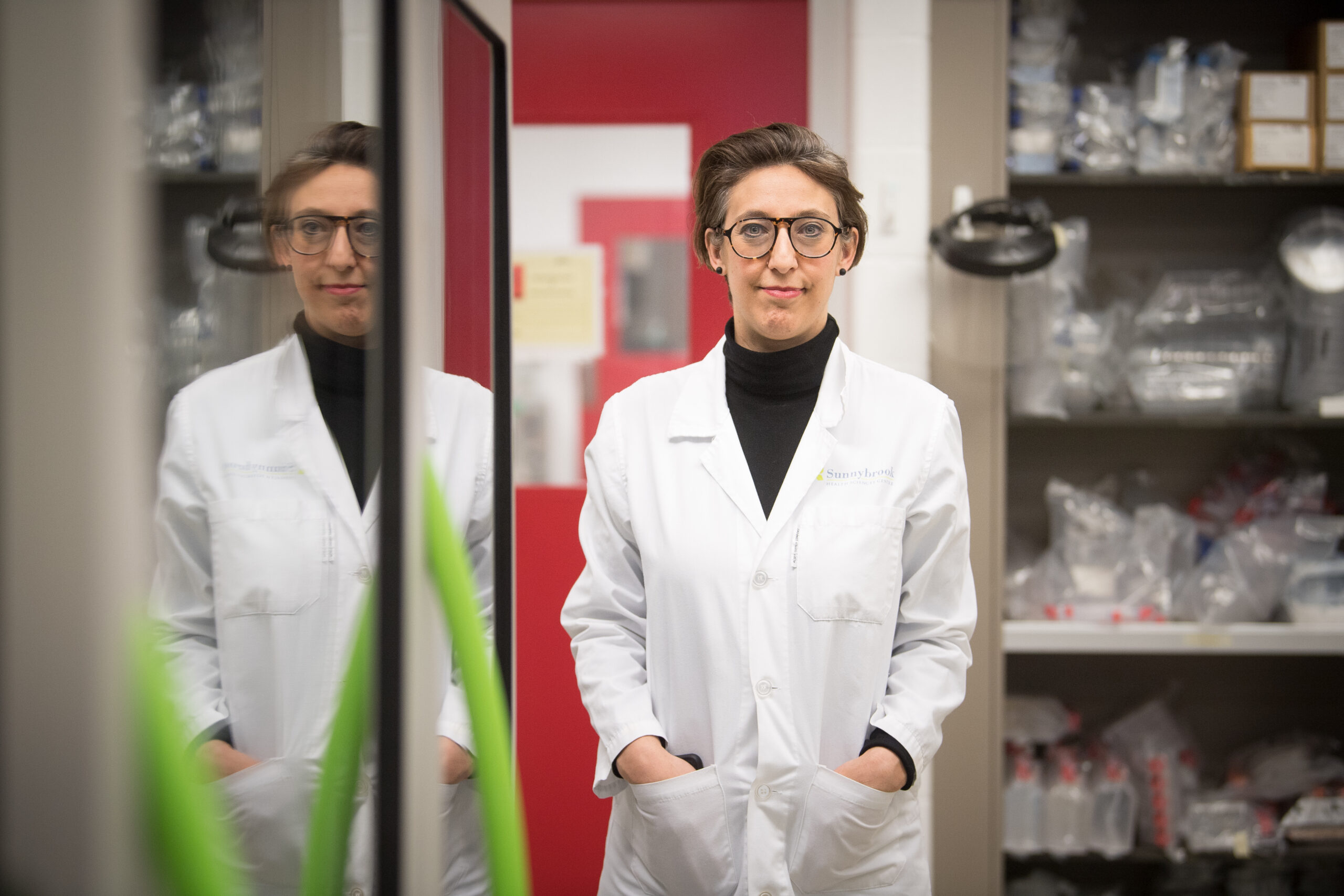
Member Spotlight: Samira Mubareka
Samira Mubareka is a clinician scientist at Sunnybrook Research Institute and an infectious diseases physician and medical microbiologist at Sunnybrook Health Sciences Centre.
U of T and Toronto hospitals mount research response to monkeypox
July 6, 2022 By Betty Zou The University of Toronto and its partner hospitals, including Sunnybrook Research Institute, Unity Health Toronto and the University Health Network, are leading a rapid research response to the global monkeypox outbreak, to better...
U of T partners with Moderna to advance research in RNA science and technology
By Rahul Kalvapalle The University of Toronto and Moderna, Inc. – known for its mRNA-based COVID-19 vaccine – plan to work together to develop new tools to prevent and treat infectious diseases. Guided by a partnership framework agreement, the U.S. biotechnology firm...
In the next pandemic, Canada will be prepared
The Toronto High Containment Facility (THCF), housed at the University of Toronto’s Temerty Faculty of Medicine, is equipped to safely study pathogens that cause infectious disease, and was among the first labs in Canada to enable researchers to work with SaRS-CoV-2 samples.
While similar facilities elsewhere had closed after the 2003 SARS outbreak, the U of T lab remained open – supporting a vast research community including academic, hospital and industrial research needs – and was able to make a significant contribution to understanding and addressing the COVID-19 pandemic.
Canada Foundation for Innovation support advances collaboration among U of T, SickKids and UHN researchers
Originally published on the University of Toronto Rahul Kalvapalle Two projects involving researchers at the University of Toronto and its partner hospitals, each aimed at better understanding and tackling COVID-19, have been awarded a combined total of nearly $2.5...

Revitalizing the life sciences ecosystem in Canada critical to country’s health security
The University of Toronto is bringing together researchers, pharmaceutical innovators and government partners to address gaps in Canada’s biomanufacturing ecosystem and discuss solutions for public health challenges such as COVID-19.