
Welcome to the Emerging Pathogens & Infectious Diseases Consortium
Welcome to EPIC – the Emerging Pathogens and Infectious Diseases Consortium.
EPIC brings together researchers, clinicians, and institutions across the University of Toronto and its hospital partners to advance infectious disease research and build lasting resilience against emerging threats.
This work builds on a long legacy: EPIC partners have played an integral role in infectious disease research for a century, from work that helped control diphtheria and eradicate smallpox, to today’s front-line research in antimicrobial resistance and infection control. Our collective response to COVID-19, highly pathogenic avian influenza, and mpox makes clear there’s never been a more important time to advance that work, from emerging pathogens and antimicrobial resistance to health inequities and public trust.
Building on this momentum, EPIC marshals the advanced research infrastructure and world-renowned research and training expertise of our EPIC partners to deliver an integrated, innovative response to the infectious disease challenges facing communities today and in the future.
Seven EPIC research clusters
Antimicrobial resistance
Protecting the effectiveness of the medicines we depend on.

Chronic infections and long-term sequelae
Addressing the long-term burden of infections that don’t resolve.

Emerging and re-emerging pathogens
Detecting and responding to new and re-emerging threats before they spread.

Health inequities
Ensuring infectious disease research and response reach everyone, equitably.

Health systems resilience
Building health systems that bend, not break, under infectious threats.

Misinformation, disinformation and public trust
Strengthening public trust through clear, credible information.

Sepsis and acute infections
Improving detection and treatment when every minute counts.
EPIC News

Member Spotlight: Shelly Bolotin
For this member spotlight, we welcome Shelly Bolotin, an associate professor at the Dalla Lana School of Public Health and in the department of laboratory medicine and pathobiology at the University of Toronto’s Temerty Faculty of Medicine. Shelly is also a scientist a Public Health Ontario and the director of the Centre for Vaccine Preventable Diseases, which aims to catalyze cutting-edge research and education that maximizes the health benefits of immunization for everyone.
Can “sleeping” bacteria spread antibiotic resistance genes?
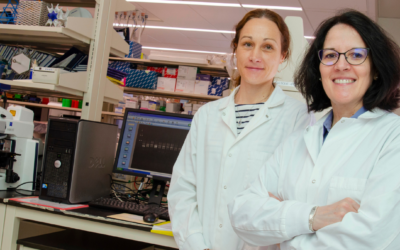
Today over sixty-five per cent of human infections are due to bacterial infections. Antibiotic resistance, when bacteria can defeat the drugs designed to kill them, is a serious health problem and remains a top concern for many clinicians and researchers. That’s why Celine Levesque’s lab has been studying how bacteria are able to survive in different conditions. Recently, together with senior research associate Delphine Dufour, they found that bacteria can pass on antibiotic-resistant DNA to other cells in the mouth. Although Levesque’s research heavily focuses on Streptococcus mutans (the bacteria responsible for cavities), their recent findings have implications that go well beyond oral health.
How bending implantable medical devices can enable infectious organisms to gain a toehold
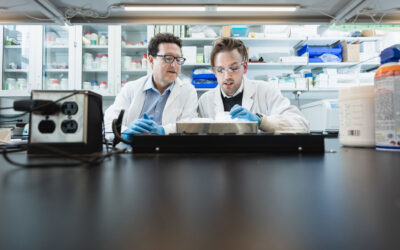
A study from U of T Engineering researchers shows that mechanical deformation of medically implantable materials — such as bending or twisting — can have a big impact on the formation of potentially harmful biofilms. The study, described in a paper published in Scientific Reports, shows that even slight bending of elastomeric materials such as polydimethylsiloxane (PDMS), also known as silicone, opens up microscopic cracks that are perfect environments for colonizing bacteria.


