

Welcome to the Emerging Pathogens & Infectious Diseases Consortium
Welcome to EPIC – the Emerging Pathogens and Infectious Diseases Consortium.
EPIC brings together researchers, clinicians, and institutions across the University of Toronto and its hospital partners to advance infectious disease research and build lasting resilience against emerging threats.
This work builds on a long legacy: EPIC partners have played an integral role in infectious disease research for a century, from work that helped control diphtheria and eradicate smallpox, to today’s front-line research in antimicrobial resistance and infection control. Our collective response to COVID-19, highly pathogenic avian influenza, and mpox makes clear there’s never been a more important time to advance that work, from emerging pathogens and antimicrobial resistance to health inequities and public trust.
Building on this momentum, EPIC marshals the advanced research infrastructure and world-renowned research and training expertise of our EPIC partners to deliver an integrated, innovative response to the infectious disease challenges facing communities today and in the future.
Seven EPIC research clusters

Antimicrobial resistance
Protecting the effectiveness of the medicines we depend on.

Chronic infections and long-term sequelae
Addressing the long-term burden of infections that don’t resolve.

Emerging and re-emerging pathogens
Detecting and responding to new and re-emerging threats before they spread.

Health inequities
Ensuring infectious disease research and response reach everyone, equitably.

Health systems resilience
Building health systems that bend, not break, under infectious threats.

Misinformation, disinformation and public trust
Strengthening public trust through clear, credible information.

Sepsis and acute infections
Improving detection and treatment when every minute counts.
EPIC News
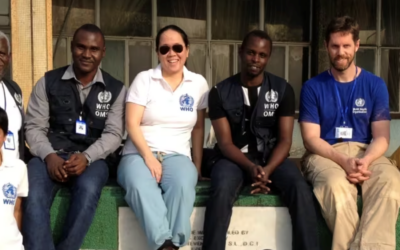
How worried should I be about Marburg? An expert Q&A with Rob Fowler
Earlier this year, Equatorial Guinea declared its first outbreak of Marburg virus disease, with 11 confirmed deaths so far. The disease is caused by Marburg virus, which belongs to the same family of viruses as Ebola, and presents with similar symptoms including high fever, diarrhea, abdominal pain and cramping, and occasionally severe bleeding. For this expert Q&A, we sat down with Rob Fowler to talk about the recent Marburg outbreak, what lessons we can take away from Ebola and how our community can help.

U of T home to new hub that will strengthen Canada’s pandemic preparedness and increase biomanufacturing capacity
A new national hub focused on enhancing Canada’s ability to respond quickly, effectively and equitably to future pandemics has become a reality with $2 million in funding from the Canada Biomedical Research Fund. Led and anchored by the University of Toronto, the Canadian Hub for Health Intelligence and Innovation in Infectious Diseases (HI3) is a collaborative, multi-disciplinary and multi-sector coalition of over 80 partners. It will provide a powerful network to support a robust domestic pipeline of life-saving vaccines and therapeutics targeting existing and emerging infectious threats.

Member Spotlight: Nicole Mideo
For this month’s member spotlight, we caught up with Nicole Mideo, an associate professor in the department of ecology and evolutionary biology in the Faculty of Arts and Sciences, to talk about her work using mathematical modelling to study parasites like the ones that cause malaria.