
Welcome to the Emerging Pathogens & Infectious Diseases Consortium
Welcome to EPIC – the Emerging Pathogens and Infectious Diseases Consortium.
EPIC brings together researchers, clinicians, and institutions across the University of Toronto and its hospital partners to advance infectious disease research and build lasting resilience against emerging threats.
This work builds on a long legacy: EPIC partners have played an integral role in infectious disease research for a century, from work that helped control diphtheria and eradicate smallpox, to today’s front-line research in antimicrobial resistance and infection control. Our collective response to COVID-19, highly pathogenic avian influenza, and mpox makes clear there’s never been a more important time to advance that work, from emerging pathogens and antimicrobial resistance to health inequities and public trust.
Building on this momentum, EPIC marshals the advanced research infrastructure and world-renowned research and training expertise of our EPIC partners to deliver an integrated, innovative response to the infectious disease challenges facing communities today and in the future.
Seven EPIC research clusters
Antimicrobial resistance
Protecting the effectiveness of the medicines we depend on.

Chronic infections and long-term sequelae
Addressing the long-term burden of infections that don’t resolve.

Emerging and re-emerging pathogens
Detecting and responding to new and re-emerging threats before they spread.

Health inequities
Ensuring infectious disease research and response reach everyone, equitably.

Health systems resilience
Building health systems that bend, not break, under infectious threats.

Misinformation, disinformation and public trust
Strengthening public trust through clear, credible information.

Sepsis and acute infections
Improving detection and treatment when every minute counts.
EPIC News
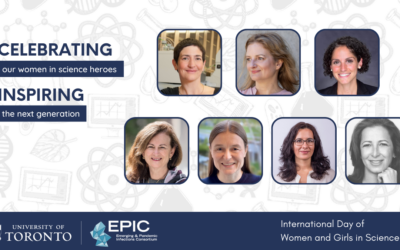
International Day of Women and Girls in Science: Seven scientists share their women in science heroes and hopes for the next generation
February 11 is the International Day of Women and Girls in Science. To mark the occasion, we asked our community of female scientists to tell us about their women in science hero who encouraged them and how they hope to inspire the next generation of girls to pursue science.
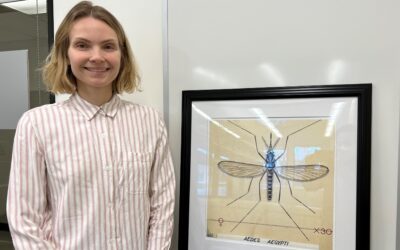
Expanding the research toolbox for one of the world’s deadliest animals
Mosquito-transmitted diseases affect an estimated 347.8 million people annually and are responsible for nearly 450,000 deaths each year, making them one of the most dangerous animals in the world. Despite their devastating impact, research on the mosquito has lagged behind that of other model organisms, in part due to the lack of appropriate tools and resources. Kathryn Rozen-Gagnon is trying to change that. Read more about how she is integrating diverse fields to study the interplay between mosquito-borne viruses and their mosquito and human hosts.
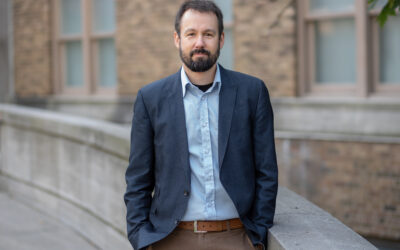
Member Spotlight: Jean-Philippe Julien
A conversation with with Jean-Philippe Julien, a senior scientist in the molecular medicine program at SickKids Research Institute and an associate professor in the departments of biochemistry and immunology in the Temerty Faculty of Medicine at the University of Toronto. He also holds the Canada Research Chair in Structural Immunology.