
Welcome to the Emerging Pathogens & Infectious Diseases Consortium
Welcome to EPIC – the Emerging Pathogens and Infectious Diseases Consortium.
EPIC brings together researchers, clinicians, and institutions across the University of Toronto and its hospital partners to advance infectious disease research and build lasting resilience against emerging threats.
This work builds on a long legacy: EPIC partners have played an integral role in infectious disease research for a century, from work that helped control diphtheria and eradicate smallpox, to today’s front-line research in antimicrobial resistance and infection control. Our collective response to COVID-19, highly pathogenic avian influenza, and mpox makes clear there’s never been a more important time to advance that work, from emerging pathogens and antimicrobial resistance to health inequities and public trust.
Building on this momentum, EPIC marshals the advanced research infrastructure and world-renowned research and training expertise of our EPIC partners to deliver an integrated, innovative response to the infectious disease challenges facing communities today and in the future.
Seven EPIC research clusters

Antimicrobial Resistance
Protecting the effectiveness of the medicines we depend on.

Chronic Infections
Addressing the long-term burden of infections that don’t resolve.

Emerging Pathogens
Detecting and responding to new and re-emerging threats before they spread.

Health Inequities
Ensuring infectious disease research and response reach everyone, equitably.

Health Systems Resilience
Building health systems that bend, not break, under infectious threats.

Misinformation, Disinformation & Public Trust
Strengthening public trust through clear, credible information.

Sepsis & Acute Respiratory Distress
Improving detection and treatment when every minute counts.
EPIC News

What you need to know about the three fall vaccines, according to U of T experts
As cold and flu season approaches, Canadians are facing respiratory syncytial virus (RSV), an increase in COVID-19 activity, and influenza — but also have new options to protect their health. To learn more, we spoke with Shelly Bolotin, director of the Centre for Vaccine Preventable Diseases, Shaun Morris, a pediatric infectious disease physician at the Hospital for Sick Children, and Allison McGeer, an infectious disease specialist at Toronto’s Sinai Health.
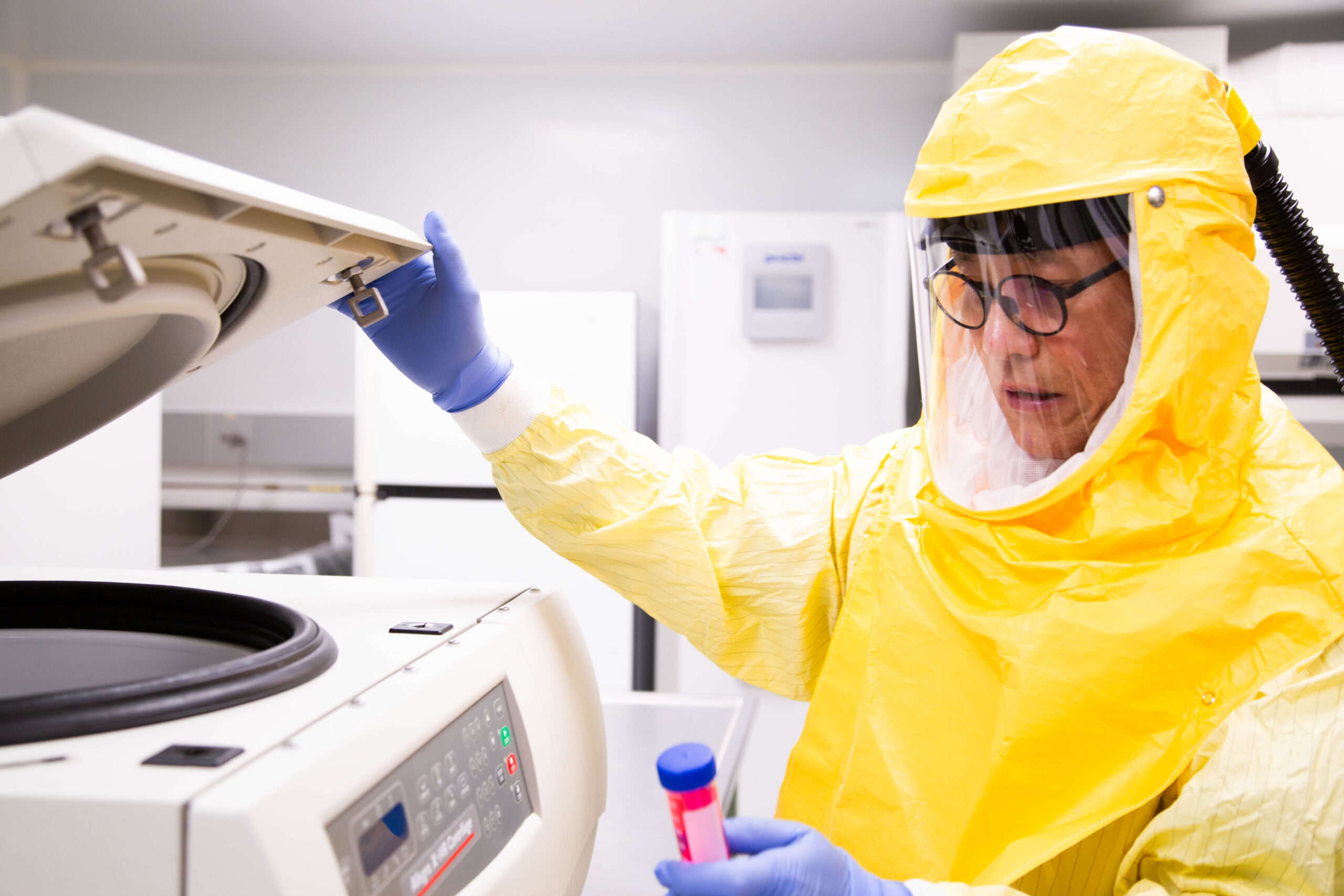
U of T researchers unveil new preclinical insights into why males are more likely to have severe COVID-19
A new study from a team of EPIC members has uncovered the biological reasons underlying sex differences in COVID-19 outcomes and is offering a promising new strategy to prevent illness. Early on during the pandemic, clinicians quickly noticed that males were more likely than females to be hospitalized or admitted to the ICU or to die from COVID-19 despite having similar infection rates. This pattern held true across all age groups and in countries around the world. The research, conducted in mice and published in the journal iScience, points to the ACE2 protein as a key contributor to differences in COVID-19 outcomes between males and females.
New U of T study uncovers how the gut microbiome boosts immune development and shields against pathogens
A new study from University of Toronto researchers is shedding more light on how the community of microbes in our gut contribute to a well-functioning immune system and defend against harmful pathogens.


